
Start where the answers are stable
Order status, appointment details, document requirements and routine product questions are good places to investigate. Refund disputes, sensitive complaints and uncertain answers need a person.
We review a representative set of tickets, find the repeat categories and check whether the answer is actually available. Missing information is a knowledge problem first.
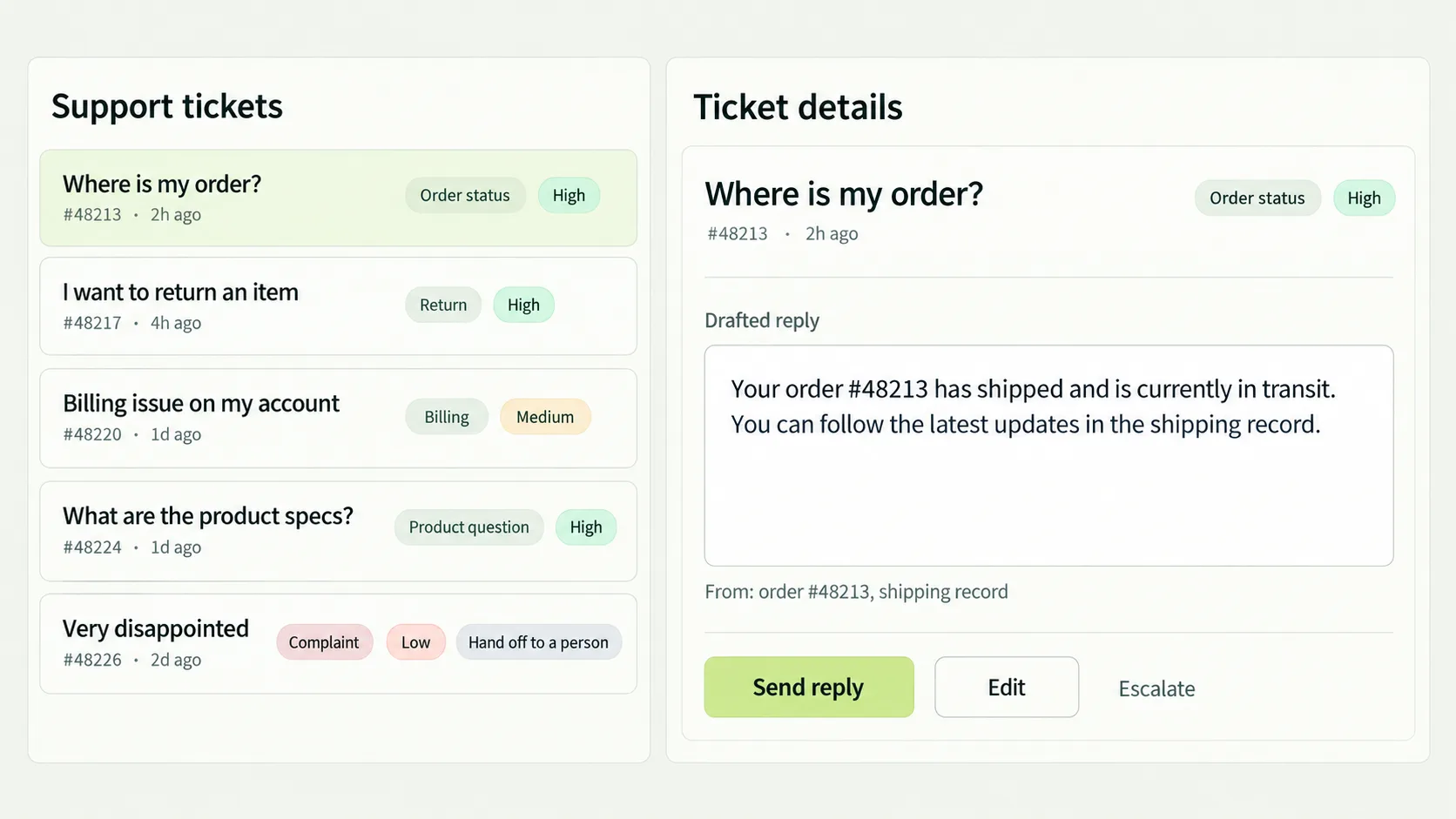
What the build includes
- One support channel and one help-desk connection.
- An approved knowledge set, with an owner responsible for keeping it current.
- Request classification, draft replies and a visible handoff to a human.
- Tests for unsupported questions, conflicting information and hostile instructions.
- Reporting on answer quality, escalation and the kinds of work still reaching your team.
Keep your promises under control
The assistant should say when it cannot answer. It should not invent a delivery date, make a refund decision or promise an exception to your policy. We write those limits into both the software and the operating guide.
We begin with replies your team can review. Direct replies are an optional later stage, after you approve the categories and the evidence supports the change.
Measure the whole support job
Fewer tickets alone is not enough. We look at resolution quality, re-opened requests, handoff completeness and the time your staff spends correcting the assistant.
Related: custom AI agents and managed AI agents. See also how we handle your data.
Will customers be trapped talking to a bot?
No. The scope includes a human handoff, and the assistant should pass along the context so customers do not have to start again.
Do we need to replace our help desk?
Usually the aim is to keep it. We confirm API access, permissions and integration limits during the audit.