
Begin with one accountable workflow
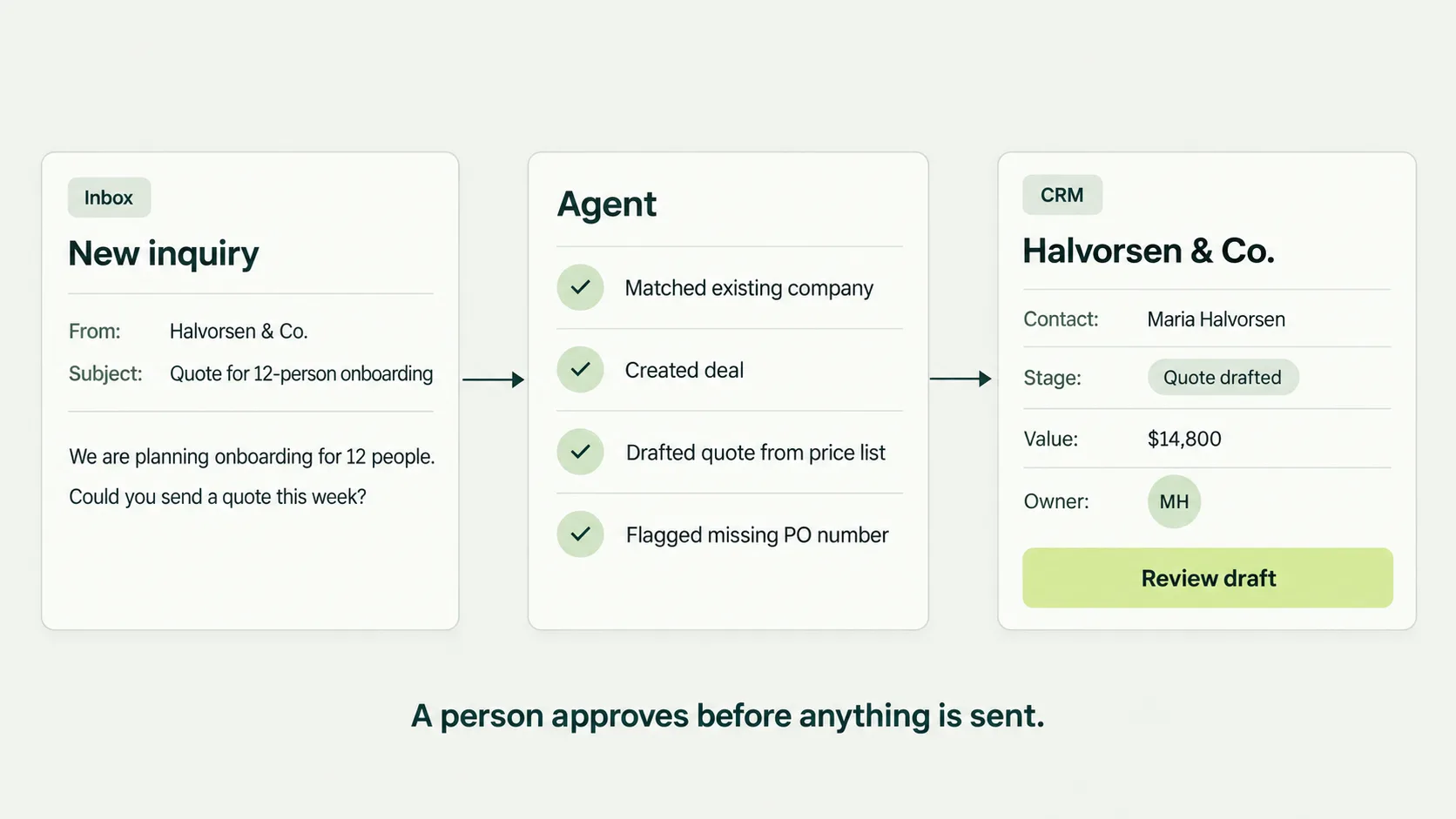
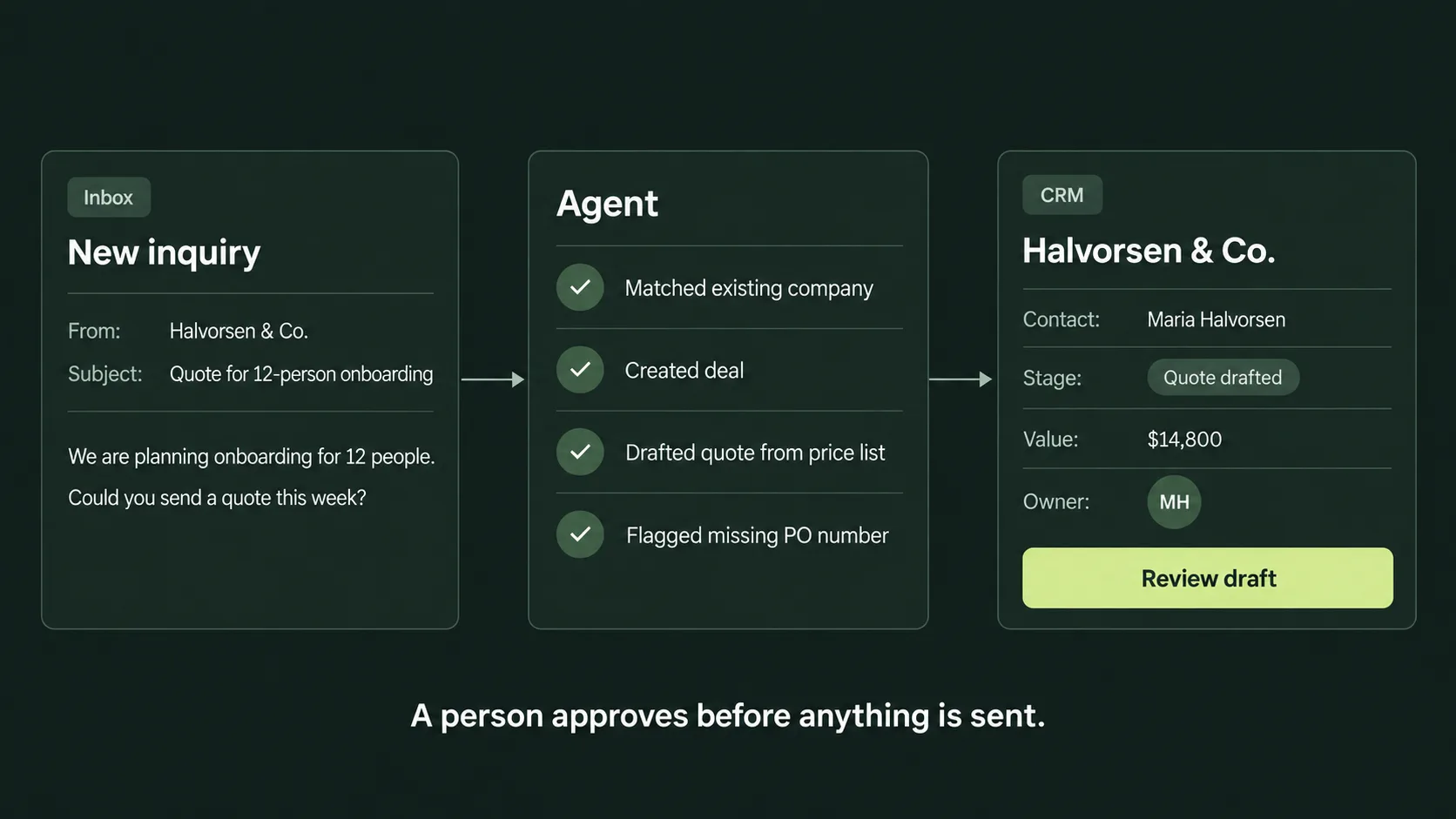
A useful agent needs a defined input and a result someone can check. It might prepare a research brief from approved sources, turn an intake email into a draft CRM record, or assemble a report for your operations lead.
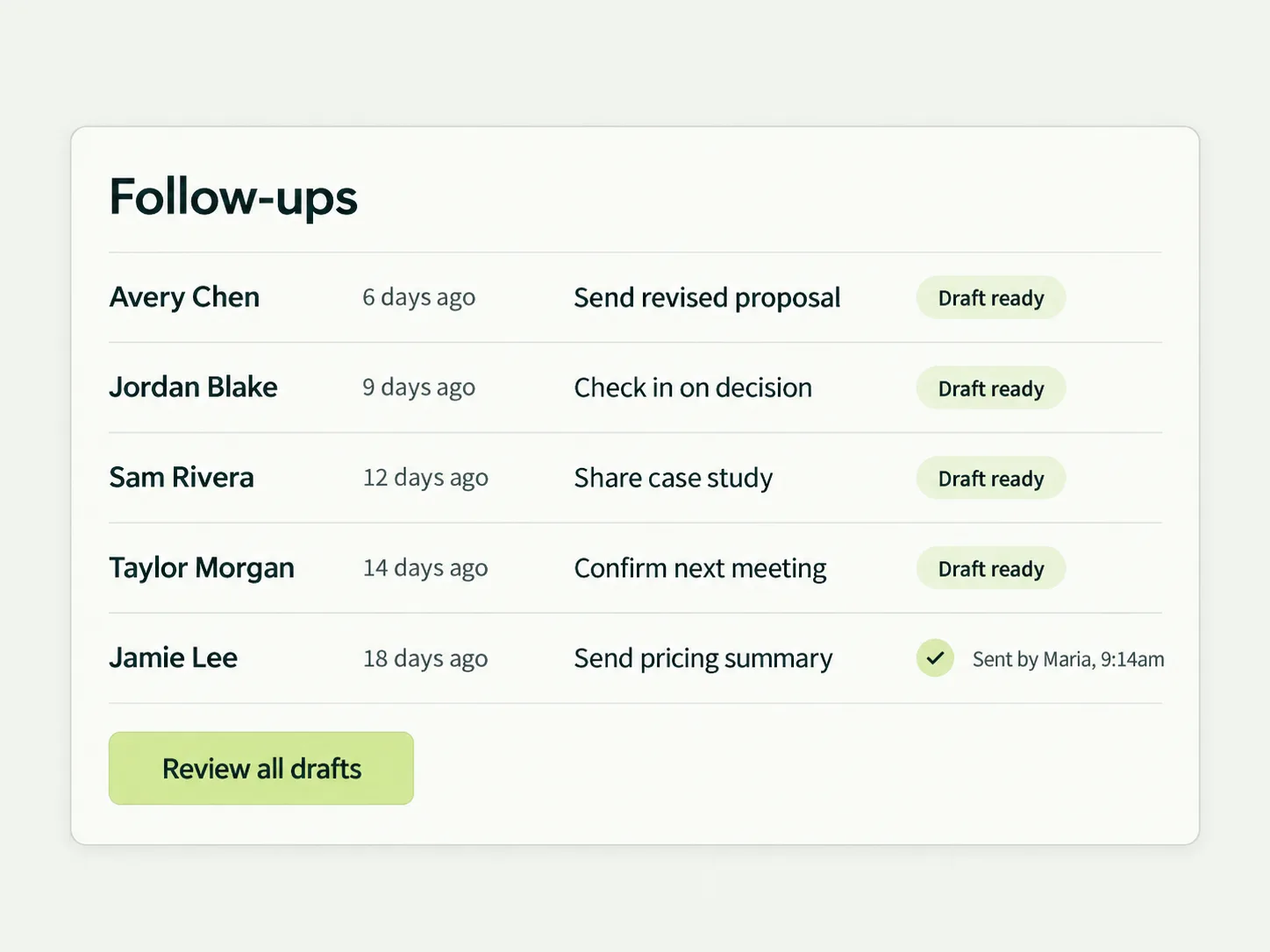
The agent prepares the work. Your team says yes to anything that touches money, records or customers. That line is part of the build, not an afterthought.
Inside a custom-agent build
- One agreed workflow with up to two system connections.
- Access rules, instructions and a small evaluation set built from your examples.
- A review or approval step for actions that affect customers, records or money.
- Error handling, logs and a way to pause the agent.
- A handoff guide that names an owner and explains routine operation.
Build around your tools
We can work with your CRM, inbox, help desk or document store where its access methods allow. Sometimes a supported API is enough. A legacy system may need a different scope, and we will establish that before quoting.
We choose the software for the job. A supervised agent can fit internal operations. A small, bounded application may fit a customer-facing interaction better.
Acceptance comes before expansion
Your team reviews representative cases and the exceptions. We agree on the accuracy, approval and recovery checks before a pilot begins. More workflows become separate scopes.
Related: customer support automation and back-office automation. See also how we handle your data.
Do we own what you build?
The agreement assigns your custom implementation and documentation after payment. Third-party software keeps its own license. Access and handoff are defined before work starts.
Can an agent change records on its own?
Only for actions explicitly approved in the scope. We start with draft or review modes and retain approval for consequential actions.